


In Guide #1: Smart Recommendations, Upsell and Rules, recently published by OPTI Software, we explain the difference between artificial intelligence architectures built from scratch (Build / Custom) and managed ones (Managed / Cloud Native). Among the most powerful Managed options is Google Cloud. Google continuously delivers major updates to its AI-powered commerce platform.
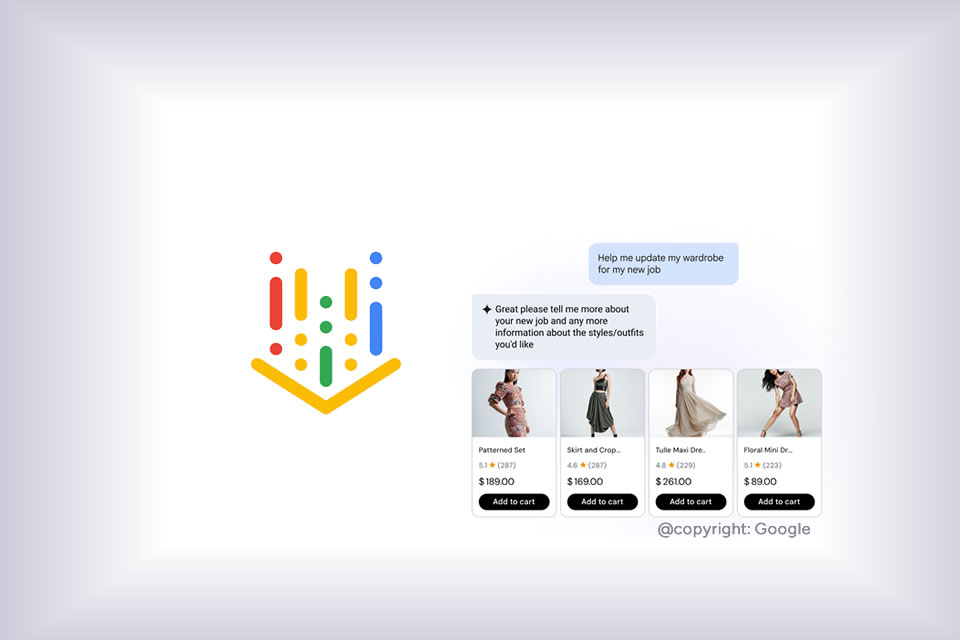
First, the service was rebranded from Retail and expanded, becoming Vertex AI Search for commerce. This evolution brings it closer to the AI search and assistant-building solution Vertex AI Search. It offers customers the transition from history-based recommendations to a conversational and agentic experience.
1. How does it work?
The data flow from the company's ERP, through the Google product to intelligent results is as follows:
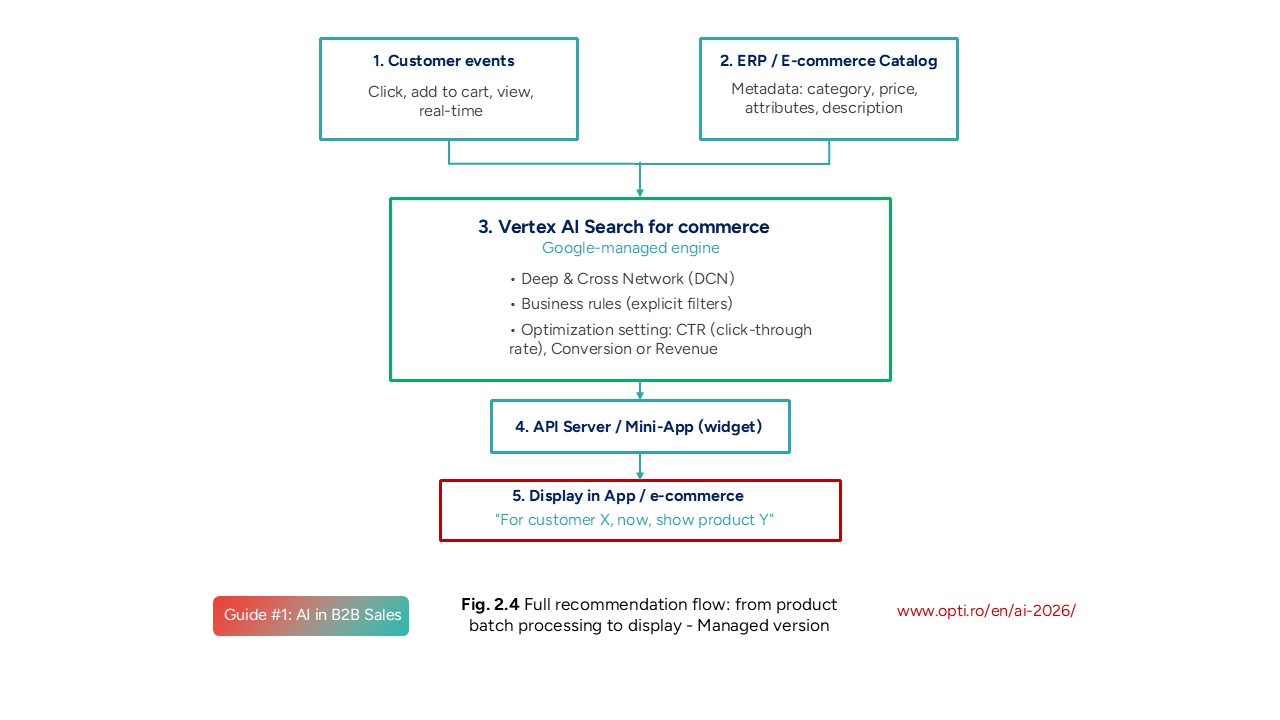
Caption: Data flow from ERP through Vertex AI Search for commerce to intelligent results
If you want to compare the Managed platform with a from-scratch implementation (Build), don't miss the comparison table in the guide:
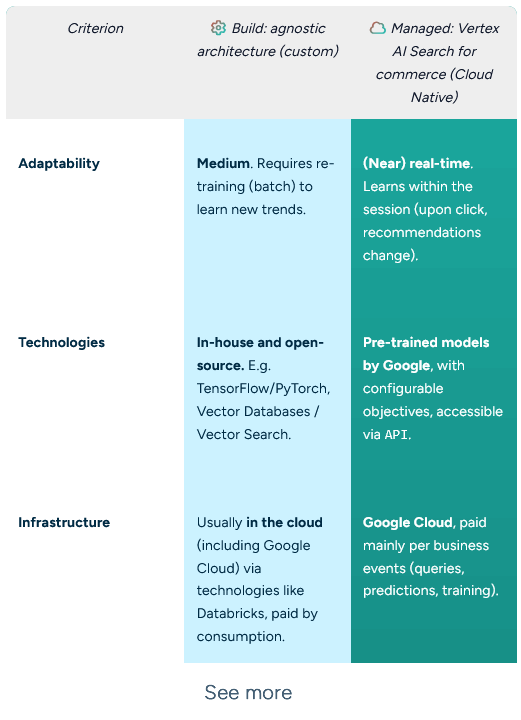
Caption: Comparison table — Build / Custom vs Managed / Cloud Native
2. Updates: the conversational and agentic future
The product runs on the same global infrastructure as the Google search engine, but uses your company's product catalog and interaction history to deliver semantic search and hyper-personalized recommendations (e.g.: "Bought Together", "Similar Products").
The 2025–2026 updates introduce essential features for modern B2B commerce:
a) Conversational Commerce & Conversational Search API
Classic search engines wait for an input and return search results. The new ConversationalSearch component uses LLMs (e.g. Gemini) to generate dynamic interactions.
If a query is too broad, the AI agent automatically asks clarifying questions to the user based on catalog attributes to refine results.
b) Merchandising Console with "Agentic Explainability"
Google launched a new console that enables visual rules (Serving Controls such as Boost, Bury, Filter) and governance through Creator and Approver roles.
It also introduces agentic explainability, helping teams quickly diagnose why a particular product was recommended. The search also returns an LLM-generated text to developers explaining the results.
c) Preparing for UCP (Universal Commerce Protocol)
As we anticipated in Chapter 6: Horizon 2027 in the guide, integrating standards such as UCP enables the shift to agentic AI. AI agents can now search, compare and negotiate directly through these APIs, without human intervention.
3. What does the technical implementation look like?
Even though Vertex AI Search for commerce is a Managed service, it must be integrated with the company's data and rules. In B2B, it is critical to enforce business rules (guardrails): not selling below minimum margin, not recommending out-of-stock or technically incompatible products.
In OPTI Software's hybrid architecture approach, we define configurations (ServingConfigs) at the application or middleware level.
Code example: Upsell prediction request with filters in Python
In this snippet, the Google platform is asked for complementary recommendations for the shopping cart, forcing the AI to apply strict stock filters and category exclusions, while also requesting diversity in results.
Snippet: Python code requesting complementary products for items in the cart, only from the non-hobby range and in stock
from google.cloud import retail_v2
project_id = "PROJECT_ID"
catalog_id = "default_catalog"
serving_config_id = "cart_upsell"
# fill in
account_id = "HASH_ID_ERP_CUSTOMER"
user_id = "HASH_ID_ERP_CUSTOMER_REP"
device_id = "HASH_ID_UNIQUE_DEVICE"
serving_config = (
f"projects/{project_id}/locations/global/catalogs/{catalog_id}"
f"/servingConfigs/{serving_config_id}"
)
client = retail_v2.PredictionServiceClient()
user_event = retail_v2.UserEvent(
event_type="shopping-cart-page-view",
visitor_id=device_id,
user_info=retail_v2.UserInfo(user_id=user_id),
product_details=[
# SKU-urile from the cart, including quantity
retail_v2.ProductDetail(product=retail_v2.Product(id="SKU-SCREW-36"), quantity=1),
retail_v2.ProductDetail(product=retail_v2.Product(id="SKU-PIN-35"), quantity=2)
]
)
# Custom attributes are essential in B2B
user_event.attributes["account_id"] = retail_v2.CustomAttribute(text=[account_id])
request = retail_v2.PredictRequest(
placement=serving_config,
user_event=user_event,
page_size=10, # maximum number of recommendations
filter='(availability: ANY("IN_STOCK")) AND NOT (categories: ANY("Hobby-DIY"))', # business rules
params={
"filterSyntaxV2": True, # allows advanced filters
"strictFiltering": True, # respects written filters, no fallback
"diversityLevel": "medium-diversity",
"returnProduct": True, # returns product metadata
"returnScore": True, # returns AI score
"priceRerankLevel": "low-price-reranking", # slightly prioritizes higher-priced products (not profit)
},
)
response = client.predict(request=request)
4. Case Studies
The transition from classic search to a predictive AI solution can lead to spectacular results.
a) Toolstation: Technical Equipment and Tools Distribution
The British retailer had accumulated over time thousands of manual search rules that addressed specific issues but couldn't keep up with an extremely vast catalog.
Result: Through the Google platform, Toolstation recorded a 10% increase in revenue attributed to recommendations and a 5% increase in search revenue.
The technology was also integrated on-premise at physical cash registers, helping staff (especially junior ones) to quickly assist customers in identifying the right technical products (see the OPTI AI copilot deliverable).
Read the international case study
b) Grupo Casas Bahia: Multibrand Retail and eCommerce
The Brazilian supermarket chain faced business scalability challenges. Updating data for hundreds of thousands of products took up to 24 hours.
Result: Catalog loading time dropped from 24 to just 4 hours. User conversion from search increased by 58%, the click-through rate (CTR) increased by 28%, and the company managed to scale daily updates to over 7 million SKUs.
Read the international case study
c) OPTI Software: AI Integration with Local ERPs (e.g. Entersoft, SeniorERP)
AI platforms need accurate data, but many B2B companies run on-premise ERP systems where search and data access is difficult. We use a hybrid architecture for incremental updates (e.g. API Patching). Any stock change recorded in the ERP is sent almost instantly to an intelligent platform connected to Google's algorithms.
Result: Adoption of OPTI's AI Sales platform by the sales team reduced quoting time by 68%, product selection errors dropped below 1%, and the average order value increased by 14%.
Engineering, not magic
AI for real-economy business activities must be controlled and measured. Moving to an intelligent sales engine based on Google Cloud technologies significantly accelerates results (higher AOV, reduced quoting time). Even advanced AI applications that were previously reserved for giants like Netflix, Booking or Uber become possible for B2B midmarket companies.
A solid hybrid architecture, based on clean data and clear business rules, is OPTI's proposal for B2B companies.
Want to find out how you can integrate Google technologies into your sales ecosystem?
Download for free OPTI Guide #1: Smart Recommendations, Upsell and Rules (172 pages)


![[UPDATE] The Romanian startup awards will be presented on March 12. Mr. Benny won 3rd place at the Romania Startup Awards 2026.](/images/new-post/small_long-romania-startup-awards-2026-mrbenny.jpg "[UPDATE] The Romanian startup awards will be presented on March 12. Mr. Benny won 3rd place at the Romania Startup Awards 2026.")