


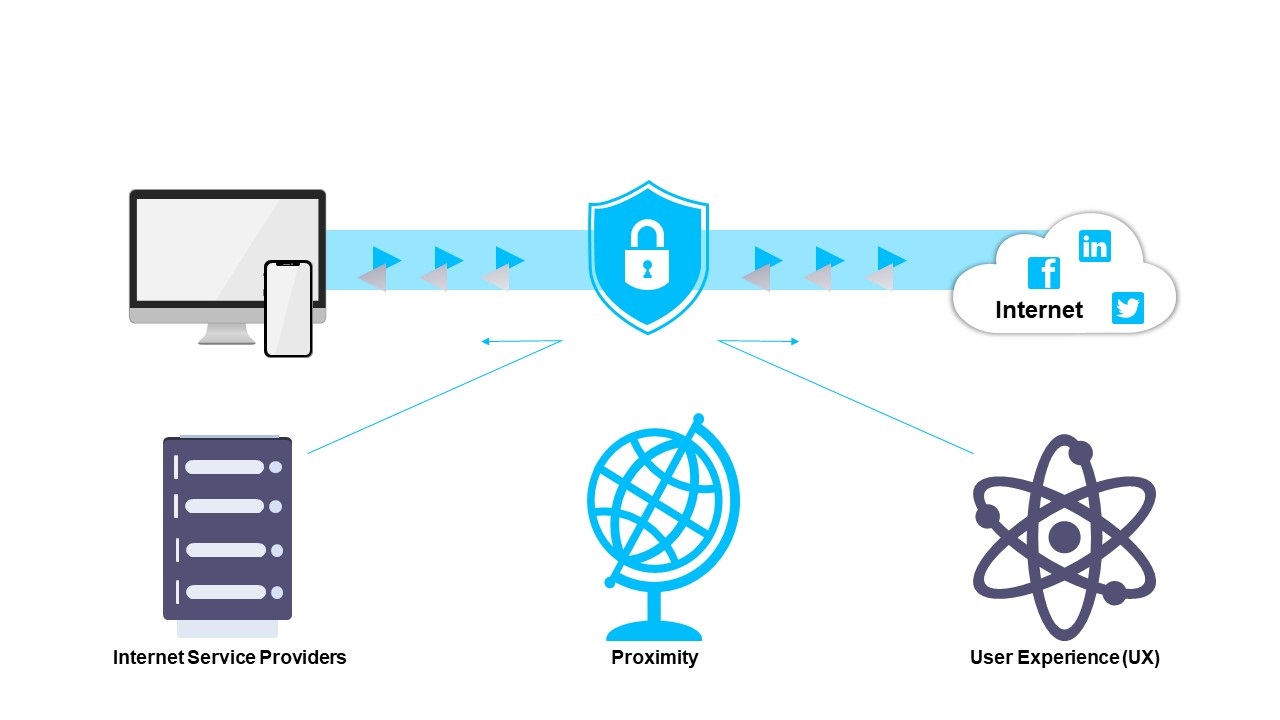


The importance of hosting your site and portals close to your users.
Tmagine two customers of your e-commerce website. The local customer breezes through your site, swiftly adding items to their cart and easily checking out. The distant customer, however, experiences frustrating delays with each click. Images load painstakingly slowly, and every additional item in their cart seems to add eons to their wait time. Finally, they abandon their cart, fatigued by the lagging site.
What's the difference? It's all about location—specifically, the location of your hosting server relative to your users.
What Does Hosting Close to Your Users Mean?
Hosting close to your users refers to the physical location of your website's server. When a user makes a request on your site—clicking on a product image or adding an item to their cart—that request must travel to your server and back. The closer your server is to the user, the quicker this process happens. It’s simply a matter of reducing the physical distance that data has to travel.
Consider the global nature of the internet. When a user in New York accesses a site hosted in Sydney, that data has to traverse a significant portion of the globe. This distance can result in perceptible delays, commonly known as latency. Latency can seriously deter users, causing frustration and potentially driving them away from your site.
The Impact of Proximity on User Experience
Let's talk about user experience (UX). In the digital world, UX is king. It's what sets successful sites apart from the rest. A crucial part of UX is the site's performance; a key performance determinant is speed. According to several surveys, users expect websites to load quickly—in under two seconds. Any longer, and they might abandon your site and take their business elsewhere.
In addition to boosting conversions, a speedy site can also improve your site's search engine optimization (SEO). Search engines often reward fast-loading sites with higher rankings, making your site more visible to potential customers. In this way, hosting your site close to your users can also contribute to your site's overall success.
Choosing the Right Hosting Solution
Hosting your site close to your users doesn't necessarily mean you need a server in every city or country where your users live. That could be impractical, not to mention expensive. Instead, consider leveraging a content delivery network (CDN). A CDN uses a network of servers worldwide to deliver content to users from the closest server. This setup can significantly reduce latency, even for users far from your primary server.
When choosing a hosting provider or CDN, consider your user base's geographical distribution. A local hosting provider might be sufficient if your users are concentrated in a specific region. However, a CDN might be a better choice if your users are spread out across the globe. Either way, the goal is the same: reduce the distance between your server and your users to improve your site's speed and performance.
So, make smart hosting choices to reduce latency, enhance user experience, and to the continued success of your online venture. It is not just about being online but about being close to your users.
OPTI offers hosting services on its own infrastructure. Contact us here