



Many organizations face challenges due to the lack of adequate digital solutions. Here are five examples where digitalization can bring significant improvements, synthesized from our interactions this year with OPTI's clients and partners.
1. Document management
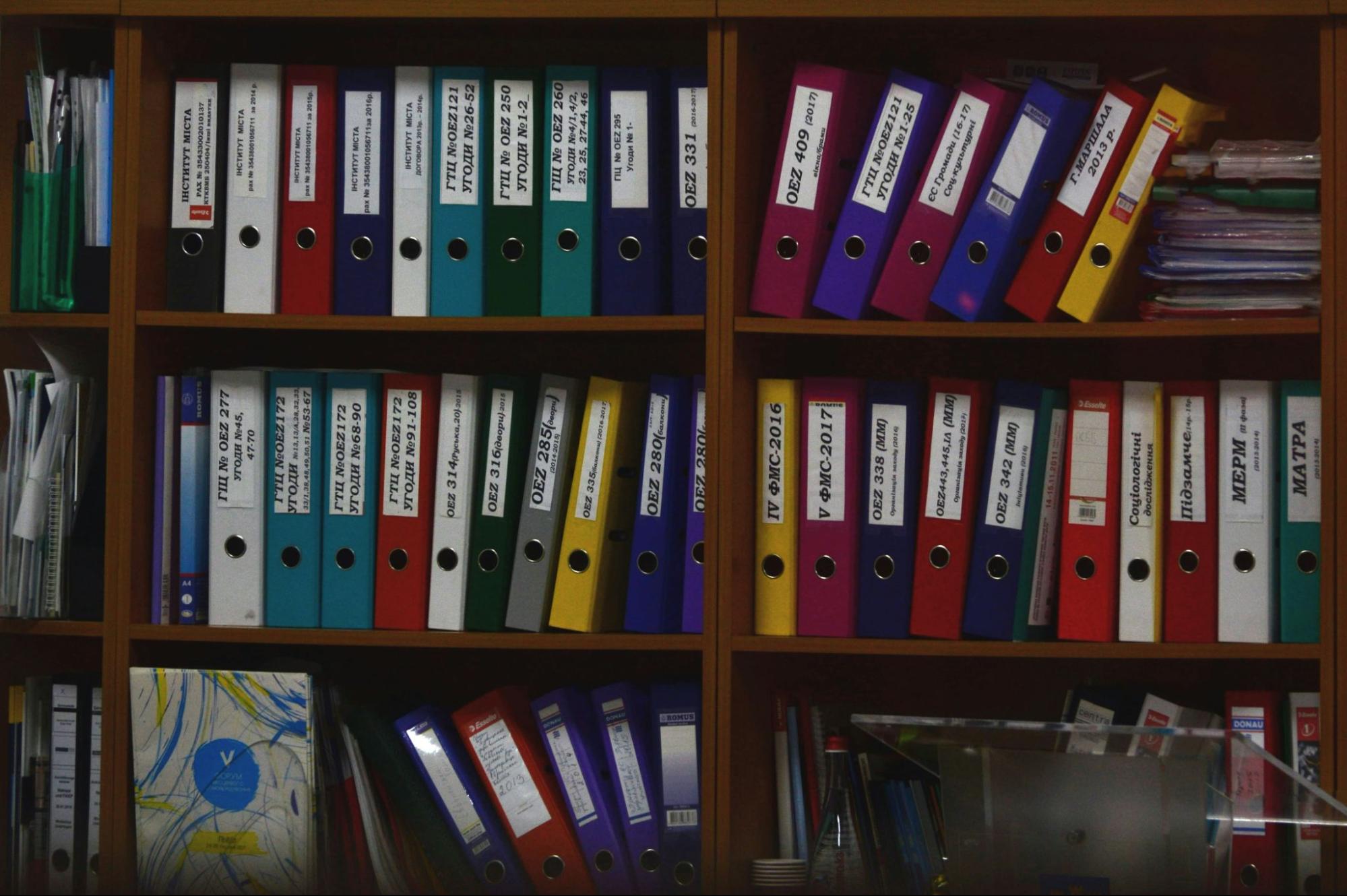
Problem: The absence of a centralized system for managing, organizing, and accessing documents can eventually lead to challenging operational issues.
Real scenario:
- 💢Problem: An organization handling large volumes of documents, including contracts, estimates, and reports (over 10,000 documents monthly and more than 10 work sites), uses a basic system for storing scanned files without labeling or categorization.
-
🤨Consequences:
- Employees spend hours searching for necessary documents in unstructured folders and files.
- Without an organization system, resources are wasted, and the time required to find documents increases.
📌Solution: Implement a Document Management System (DMS) that allows for automatic labeling, categorization, and advanced search capabilities.
👉See our Digitalization of the Bucharest Bar Association – The Electronic Registry 2024 - OPTI case study.
2. ERP/CRM integration
Problem: Unintegrated ERP and CRM systems can create difficulties in accurately tracking data (invoices, inventory, marketing campaigns, customer information, etc.)..
Real scenario:
- 💢Problem: An organization uses an ERP system to manage inventory and sales from 6 physical locations and an online site, but the CRM system for managing customer relationships is not fully integrated with the ERP.
-
🤨Consequences:
- The CRM does not automatically transmit customer information (such as name changes or marketing campaign statistics) to the ERP, which can lead to discrepancies in billing and all accounting operations carried out in the ERP, limiting data analysis and decision-making.
📌Solution: Fully integrate ERP and CRM systems to synchronize data or develop custom software if integration does not fully meet the organization's needs.
👉See our Building a unified analytics dashboard for a gaming company - OPTI case study.

3. Project management
The lack of a project planning system, progress tracking, and assignment of responsible individuals.
Real scenario:
- 💢Problem: An organization with 12 employees and a turnover of over €1,000,000 operates not through a project management system but through direct communication.
-
🤨Consequences:
- Inefficiency: Project management through direct communication becomes more difficult as the company and teams expand, with the same information needing to reach more and more people (like a game of telephone).
- Poor collaboration: The lack of a centralized platform containing project information (such as the current stage, responsible persons, attachments, completion date, etc.) hinders collaboration between departments and teams, potentially resulting in confusion and internal conflicts.
📌Solution: Implement a project management platform that facilitates real-time collaboration, progress tracking, and resource management, such as Zoho Projects, Jira, or Asana.
👉See our How OPTI developed a fair task distribution system for the lawyers of Bucharest - OPTI case study.

4. Business process automation
Problem: Organizations that do not automate repetitive processes are left with only the option of intensive manual labor performed by human resources.
Real scenario:
- 💢Problem: An organization engaged in accounting and financial consulting uses manual procedures for generating financial reports and updating data.
-
🤨Consequences:
- Inefficiency: Human resources could focus on more important or valuable aspects for both themselves and the organization, but they are instead used to perform tasks that could be done more quickly by robots.
- Human errors: Manual data entry can lead to errors in reports, affecting the accuracy of financial analysis..
📌Solution: Implement process automation solutions (RPA) to reduce repetitive tasks and improve operational efficiency and accuracy.
👉See our How a German enterprise implemented automated invoicing using HubSpot and EasyBill - OPTI case study.

5. Customer relationship management (CRM)
Problem: The lack of an adequate CRM system or using a CRM that cannot meet the organization's needs can hinder the efficient management of customer relationships.
Real scenario:
- 💢Problem: An organization uses a CRM that does not capture all relevant customer information and does not allow for personalized communication or report generation based on specific criteria, such as purchase date, total value of all purchases, purchase history, etc.
-
🤨Consequences:
- Lack of personalization: The CRM does not allow customer segmentation based on purchase history.
- Limited reporting: The CRM does not offer detailed analyses of sales performance or customer feedback, limiting the ability to optimize future sales strategies.
📌Solution: Adopt a CRM that fully meets the organization's needs or develop a custom solution that integrates all necessary information with the existing CRM to allow for personalization and detailed report generation.
👉See our Streamlining operations by merging two businesses into one HubSpot account - OPTI case study.