Note: This article is over a year old. Some information may be outdated. We recommend reading the latest documentation or talking to one of our experts.
Conversational chatbots are transforming customer service as we know it.
Growth has been so spectacular in 2021 that some organizations are
reporting 70% fewer calls, chats and emails after automating customer
service with chatbots.
A chatbot is a software that simulates human conversation through text or
voice interactions. It uses AI technology and natural language processing
(NLP) to understand what a human wants and helps the person achieve the
desired outcome or identify quickly the needed information. It can be used
in all kinds of messaging applications, mobile apps or websites.
Having these details in mind, let’s dive in and learn more about the types
of chatbots businesses can implement and the benefits they bring to the
overall customer experience and internal processes.
Type of chatbots businesses can leverage in their operations
As highlighted above, chatbots have a wide range of implementation
possibilities. However, at their core, they are split into two categories:
Rule-Based Chatbots: These use predefined scenarios and rules and the
interaction is done by clicking on predefined options or by using keywords.
These rules guide the user with follow-up questions to eventually get to
the correct solution. The answers the user receives are also predefined so
your company is in full control of the conversation at all times. The
implementation process is fast and not so complicated so the price is
usually affordable. As a downside, the interactions with this kind of
chatbot seem robotic and all the improvements must be done manually. In
addition to that, businesses need to constantly update their scenarios
based on the previous conversations with the users and the new patterns
identified in the interactions.
AI-Based Chatbots: These use Natural Language Processing (NLP) and unlike
the rule-based chatbot, they don’t use keywords or predefined sentences.
The AI-based chatbots can be trained in answering basic questions regarding
account balances or offer information about new services, promotions or
other business-related inquiries. The more it interacts with its users the
better it becomes at answering their demands. The chatbot can understand
typos or grammar mistakes, will improve without further assistance and will
feel more natural than the rule-based chatbot. As a downside, the fact that
these bots go through a learning process will make the implementation
process more costly and time consuming. Also, the fact that it is not using
predefined structures will make the conversations less predictable and
prone to errors, at least in the initial phases.
Benefits of chatbots for businesses
Now that we know the types of chatbots, let’s also walk through some of the
main benefits of implementing such tool in a company:
Valuable business insights: By collecting the data from the chatbot
conversations, businesses can be notified early regarding any problems that
the customers are experiencing at a given moment.
Always-on customer service and reduced waiting time: The chatbot is able to
offer 24/7 customer support in a cost-efficient way. This facilitates
greater customer satisfaction since clients will not wait for a transfer to
a real person.
Reduced customer service workload: A good chatbot will help the customer
support department focus on more challenging tasks and not lose precious
time on routine tasks that can be automated. A chatbot could also provide
information about past chatbot conversations to a specific customer helping
in delivering relevant solutions for a problem .
Uplift in sales and product features: By learning what clients want to
purchase at a given time, the sales team can upsell and cross-sell products
or services to better fullfill the customers’ needs. In addition to this,
based on the most frequent questions and request, a business can decide to
develop new features and implement upgrades to the product or service to
maintain great customer experience.
Final thoughts:
The use of chatbots in customer service increases client satisfaction and
saves business costs. Even if the bots are not yet perfect they are the
best way to provide quality support for the customers 24/7. If you want to
use chatbots for your business, OPTI can assist you in implementing the
right tools in a cost-effective manner. Reach out today!
Quick Questions
What is the TLDR (conclusion)?
AI-based chatbots, which use Natural Language Processing (NLP), are becoming increasingly popular. Unlike rule-based bots, they can understand user intent, handle complex queries, and learn from conversations, providing a much more human-like and effective customer experience.
What technologies and methodologies are involved?
Technologies: AI (Artificial Intelligence), NLP (Natural Language Processing) Methodologies: Customer service, Automation, User experience (UX), Sales, Business Intelligence
Why does ChatGPT fail in B2B? Discover how Hybrid AI Architecture (neuro-symbolic) protects data and combines neural networks with strict business rules for distribution, manufacturing, and B2B.
Major 2025-2026 updates to Vertex AI Search for commerce: Conversational Search API, Merchandising Console with Agentic Explainability, and UCP readiness. Case studies from Toolstation and Grupo Casas Bahia. Hybrid ERP integration by OPTI Software.
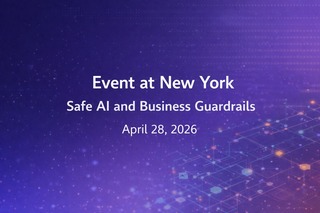
BeeGlobal & System2 conference in New York, April 28, 2026. Marian Călborean (OPTI Software) presents hybrid AI architecture and guardrails in Google Cloud. In-person event in Manhattan.