
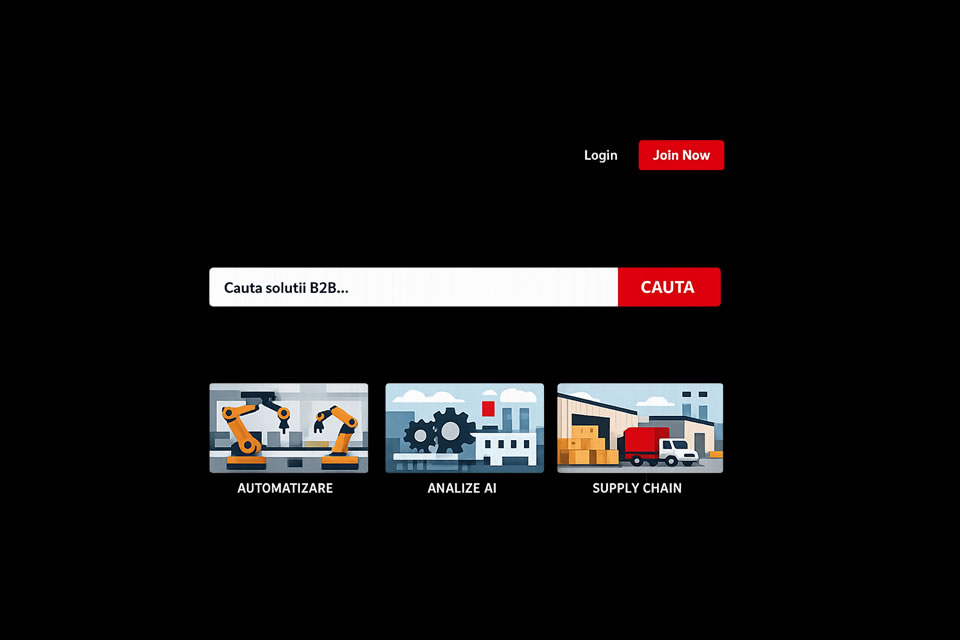


In 2026, the B2B buyer no longer compares the experience on your portal or website only with that of the competition. They compare it with the experience they have in the evening on Netflix, or in the morning when ordering an Uber.
Indicators from Guide 1 "Recommendations, upsell and rules"
- 75% is the percentage of business customers who expect proactive offers.
- +15% is the average order increase in e-commerce with AI personalization and suggestions.
AI for the mid-market
In a previous article we discussed essential AI projects for logistics and inventory ("blue-collar"). Today we present sophisticated projects from OPTI Guide 1: algorithms that influence buyer psychology and maximize margin.
These technologies were once reserved for tech giants. Today, through the hybrid architecture proposed by OPTI (AI via Google Cloud connected to ERP data), any mid-market company can implement them.
Here are the last 5 (of 10) AI projects from Guide 1, explained through the lens of the major players that established them:
B2B Portal Personalization ("Netflix-style")
Success models: Netflix / Spotify
Just as Netflix does not show the same films to all subscribers, a B2B portal with tens of thousands of products should not show the same products to a plumber and an electrician, even if both buy from the same distributor.
What does AI do?
Reorders products, categories, and banners based on industry and browsing history. If the AI detects an interest in the "Premium" range, it will hide "Economy" products from the first page. A plumber sees pipes and fittings; an electrician sees cables and fuses.
Ideal industries
Generalist wholesale, B2B marketplaces.
Industries with immense catalogs (tens of thousands of SKUs) where customers waste time searching.
Logic flow
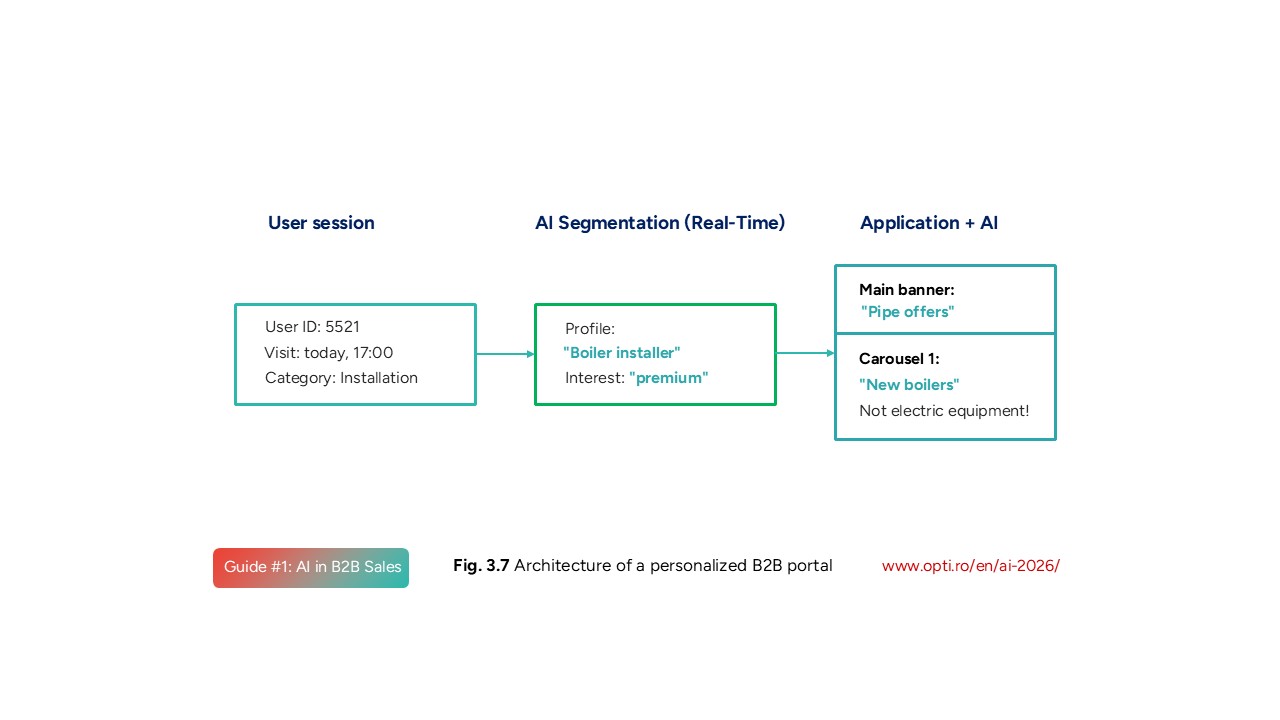
See in the guide: Why 10-30% of products should be kept without personalization
Hyper-personalization (Contextual Cart Recovery)
Success models: Booking.com / Wayfair
This is not just the usual "You forgot something in your cart" email. We are talking about injecting real context and urgency using generative AI, just like Booking.com does ("Only one room left").
What does AI do?
Queries the ERP in real time before sending the email. The message is not generic, but specific: "Since you are a Gold customer, we are letting you know that stock for Laptop X1 (which you have in your cart) has dropped to 2 units. Would you like to reserve them?"
Ideal industries
IT & Electronics distribution, industrial equipment.
Industries where stock fluctuates rapidly.
Logic flow
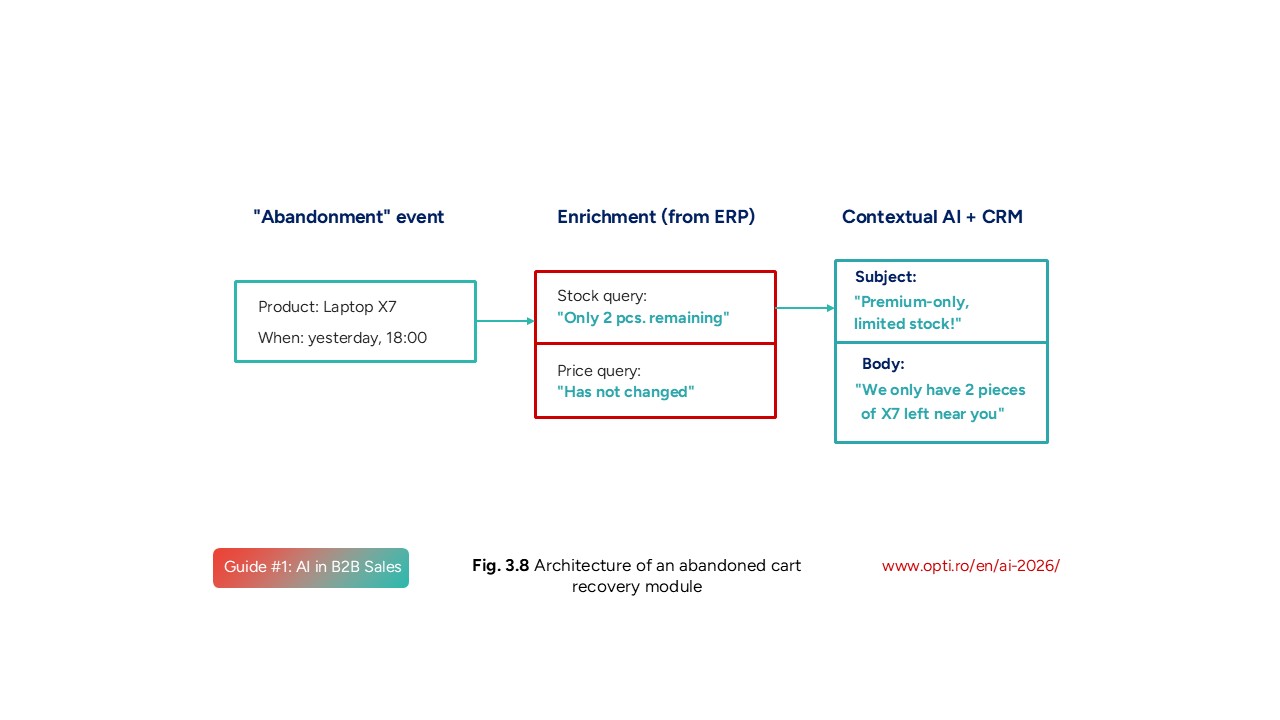
See in the guide: What checks to perform before sending the email
Technical Compatibility (Proactive Alert Engine)
Success model: Amazon Automotive / Grainger
These AI systems will warn buyers or sales agents: "This part does not fit the car in your history" or "The processor does not match the motherboard".
What does AI do?
Analyzes the shopping cart before checkout. Using a knowledge graph (GraphRAG) or deterministic rules, it detects technical anomalies and suggests the customer re-verify, preventing returns. It can also work on unstructured descriptions or on return history.
Ideal industries
Automotive (spare parts) and DIY / Construction / Electrical.
Industries where compatibility is critical.
Logic flow
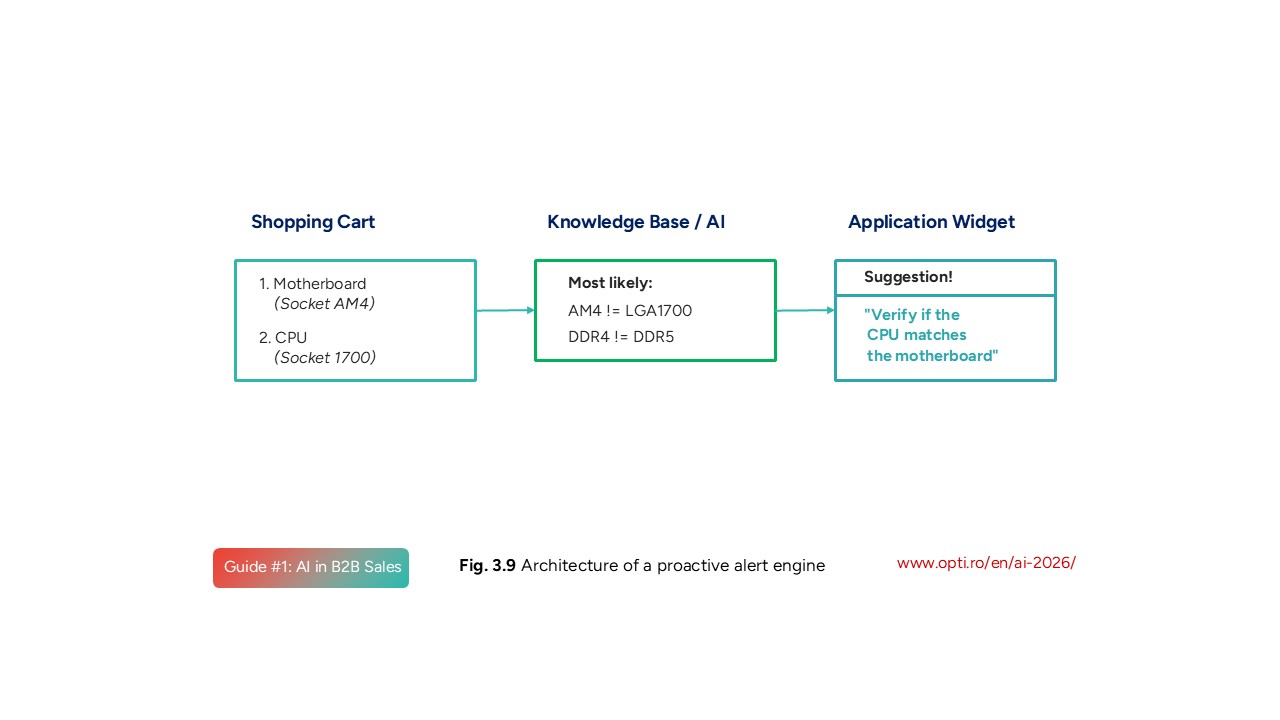
See in the guide: Why AI makes suggestions instead of blocking the order entirely
Rapid New Product Promotion (Cold Start killer)
Success model: TikTok / Fast Fashion (e.g. Zara)
How does TikTok make a new video go viral when it has zero views? It analyzes content, not history. The same happens in the fashion industry where new products appear continuously and you don't want them to die on page 45 of the site.
What does AI do?
Analyzes descriptions, attributes, documentation (e.g. CAD), and optionally images using Content-Based capabilities (Gen 3). In vector space, Range 1 2027 will be close to Range 4 2026 and relevance is transferred. Being the successor of an older popular product, it is pushed forward to relevant customers.
Ideal industries
Fashion & Retail, Furniture and décor, Electronics.
Any industry where new products appear constantly.
Logic flow
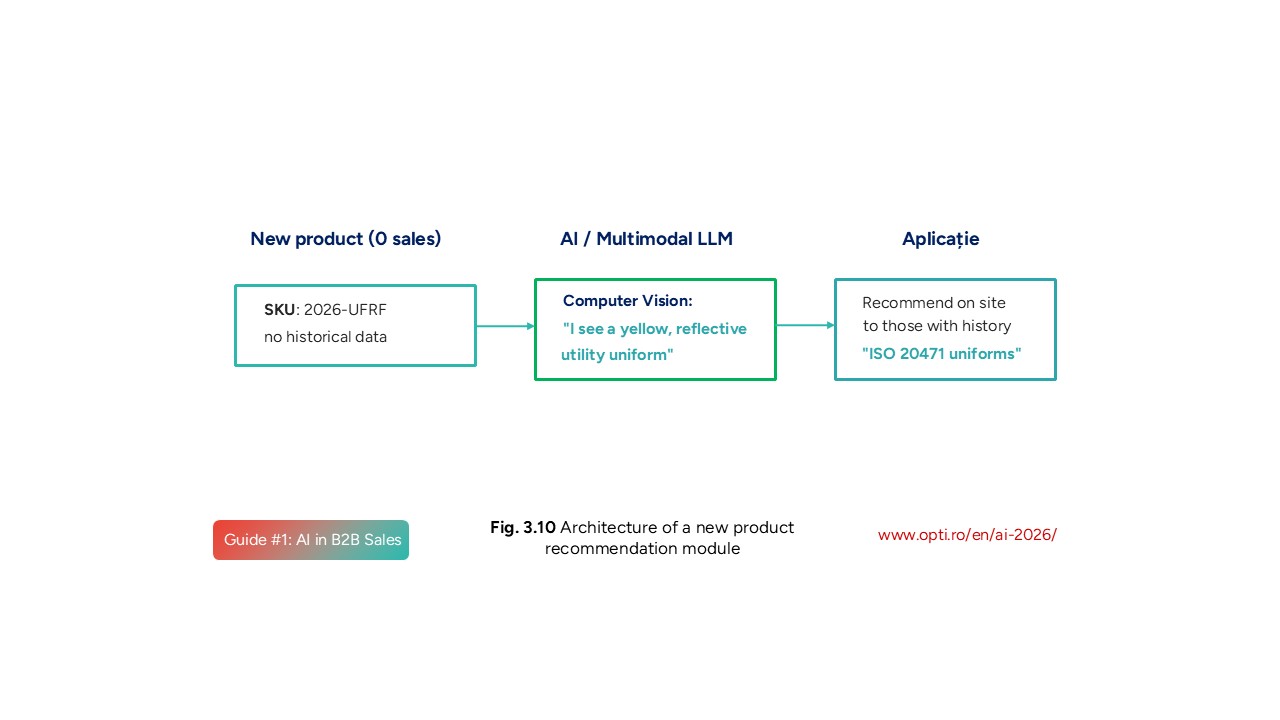
See in the guide: Stock protection when promoting new products
% Dynamic Price Optimization (Uber-style)
Success model: Uber / Lyft / Airlines
The price is not fixed — it depends on demand, supply, and the probability that the buyer will make the decisive move. Be aware of reputational and compliance risk if not applied across all channels in a controlled and explainable way.
What does AI do?
Estimates the conversion probability (pCVR) of the customer at list price. If the customer hesitates, the system can offer the minimum necessary discount to close the sale, protecting the margin. This is the opposite of blanket discounts for all customers.
Ideal industries
B2B services, Distribution.
Industries where margins are volatile or perishable products are sold (time costs money).
Logic flow
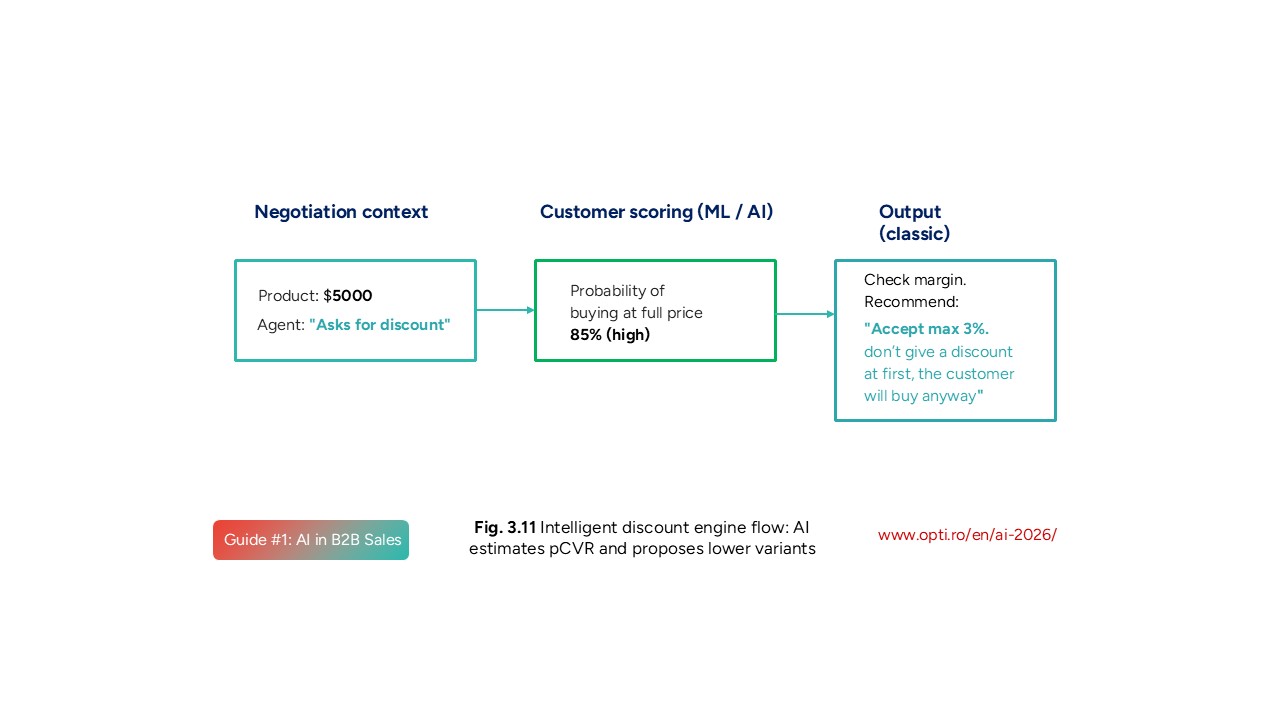
See in the guide: Custom AI models for dynamic price optimization
Conclusion
You don't need to be Amazon or Uber to use these tools. You only need your own data (even from a legacy ERP) and an architecture that puts AI into production safely.
OPTI's approach
Founded in 2005, OPTI Software uses its partnership with Google for cloud and HubSpot for CRM (e.g. Breeze agents) in its AI projects. They elegantly resolve the tension between innovation (selling more) and control (not selling at a loss of margin or reputation).
20 years of experience in custom development are the foundation for successfully integrating AI with existing software.
In B2B, engineering matters. We must know, in order to foresee, in order to act (fr. "Savoir, pour prévoir, afin de pouvoir." - Auguste Comte)