
Brief of March 2026
Google Cloud launches, New York event and B2B projects
In newsletter: Two case studies, MrBenny award and OPTI community.
See March Brief


For the Bucharest Bar Association, operational accounting includes collections and payments, recurring monthly obligations, fees of various types, penalties, exceptions (exemptions/postponements), as well as a large volume of operations that must be reconciled quickly and in an auditable manner.
Following the need to regularize old debts in a predictable way, the requirement for rescheduling emerged: transforming historical debts into a schedule of future installments that are easy to track and collect, without affecting traceability and ongoing operations.
OPTI implemented a technological upgrade of the Bar's accounting and financial reporting application, with the core being the implementation of a modern rescheduling module. This module breaks down old debts into future monthly liabilities tracked in parallel, introduces a complex settlement order when payments must be distributed between primary obligations and rescheduled ones, and allows continuity of previous accounting processes, including reporting.
OPTI Software has been delivering business applications for 20 years, focusing on stability, scalability, and security. The company is certified ISO 9001 and ISO 27001, and works with certified experts.


Rescheduling had to function as a financial instrument, as a new way to settle historical debts. While behaving in the future as new predictable obligations. The objectives were:
1. Parallel operation of current obligations and installment payments
2. Allocation of a single payment across a mixed set of debts
3. Avoiding duplicated penalties and ensuring integration

OPTI implemented the rescheduling feature as an extension compatible with the existing accounting workflows, deeply integrating the new capability into the system. Key components:
The data model ensures the transition from operational accounting to advanced reporting, while also enabling auditability and traceability.
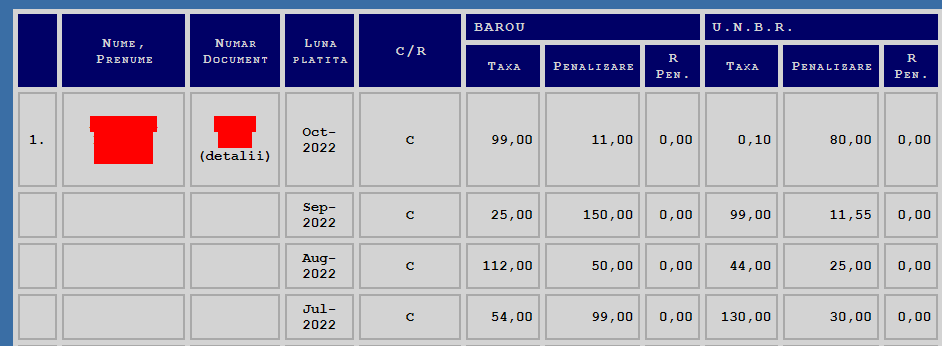
Separation between current debts and installments (C/R), and between penalties from current debts and those from installments (R.Pen).
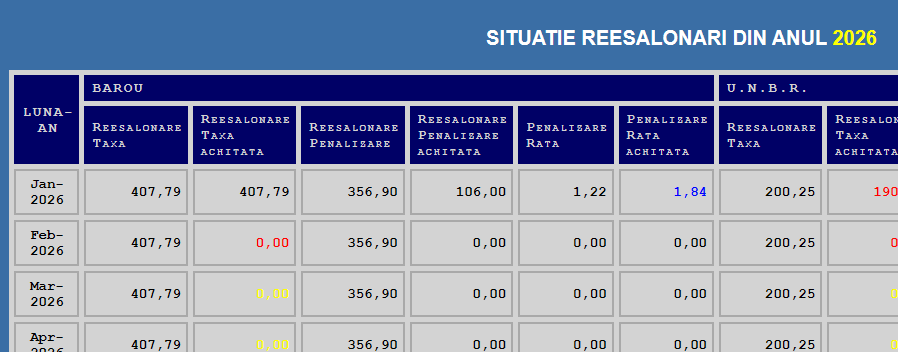
Rescheduling summary showing due installments and their status.

A module that converts historical debts into future installments tracked separately in the accounting system. It enables intelligent payment distribution across current obligations and installments, with a clear satisfaction order and complete audit trail.
Three key challenges: managing current debts and installments in parallel, correctly distributing a single payment across multiple obligation types with different due dates, and preventing doubled penalties in the existing system.
The rescheduling module was integrated as a compatible extension of existing accounting workflows, without modifying or disrupting current processes. Users continue to work in the same screens with newly integrated options.
Individual lawyers will be able to view their settled debts and rescheduling installments in their Lawyer Account on the Bar Association's website, secured and accessible on mobile.
This case study shows the implementation of a modern rescheduling module in the accounting application of the Bucharest Bar: transforming historical debts into predictable future installments, intelligent payment distribution, and separate reporting.
Technologies: HTML5, JavaScript, PHP, MySQL, PDFlib, BugBug, ERP systems, web applications, ISO 9001, ISO 27001
Methodologies: Business rules, Rapid prototyping, Incremental implementation, Testing and edge cases, Regression on reports and exports, Controlled rollout, Feedback integration, Audit and compliance

Article written by
Senior Software Engineer (with OPTI since 2013). eCommerce, database and backend optimization.
See on LinkedIn →