Introduction

The Center for Research in Applied Ethics, part of the University of Bucharest, Romania, sought to enhance its online presence.

The new platform needed to support the Center’s mission of facilitating discussions on moral and ethical issues within various institutions and organizations.

By partnering with OPTI, the Center aimed to build a hub for academic resources, publications, and advisory services for a wide-ranging audience, including schools, hospitals, multinational companies, and other organizations.

Provocări tehnice

Challenges

The project faced both technical and human challenges, such as the following:

Need for a modern website - The existing website was outdated and lacked the functionality and design for an active research center.

Facilitating of ethical discussions - The website needed to serve as a platform for addressing moral issues across various institutions and organizations.

Diverse audience - The website had to be accessible and engaging for a wide range of users.

Content modules - The website required modules to showcase the Center’s international projects, publications, and advisory activities.


Constantin Vică
"With the digital communication and website infrastructure built together with OPTI, we have always felt at the level of our academic partners in Oxford, Basel or Tubingen. The digital platforms we developed with OPTI are always a boost for our research, whether we are talking about cognitive and moral enhancement, virtuous artificial intelligence or the ethics of emerging technologies."
- Constantin Vică, Center for Research in Applied Ethics

Solution

  1. Integration of social networks
    • The website was linked to the Center's Instagram, Facebook, Twitter, and YouTube accounts.
  2. Custom tabs and info hierarchy module
    • Sub-pages are organized as tabs using dedicated modules, allowing for better content navigation.
  3. SEO Implementation
    • Sitemaps, semantic tags, and Google optimizations were added to improve the site's search engine ranking.
  4. Publishing new articles
    • New academic articles were disseminated and published via the Zotpress plugin.
  5. Rich sidebar and zone area
    • Functionalities included a site search bar, news section, academic articles section, "Are you interested" section, "Applied Ethics Newsletter", etc.
  6. Tags
    • Research areas were tagged throughout the site, allowing for a visually stunning display of content.
  7. Adding content to pages
    • The ability to add titles, texts, images, lists, and more was integrated.
  8. Custom display of content
    • Content was structured and styled according to the Center’s specific requirements, using web technology.
  9. Maximum control for the beneficiary
    • Special content-builder in WordPress were implemented, giving maximum control over the website’s content.

References

Nicolae Amarghioalei

Article written by

Nicolae Amarghioalei

Customer Success Manager. Cloud and Onboarding Specialist.

See on LinkedIn →
Interesat?

Want to know more?

Contact us

Similar stories


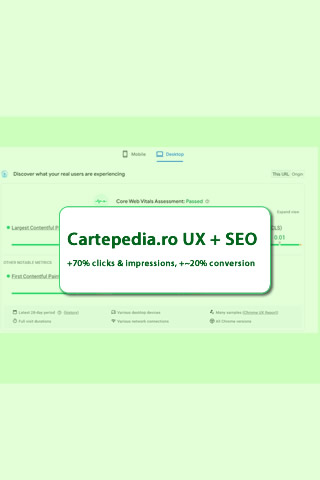
Case Study: E-Commerce UX & SEO modernization (Cartepedia)
24.11.2025
Case Study: E-Commerce UX & SEO modernization (Cartepedia)
Case Study: How we drove +70% traffic and +20% conversion for Cartepedia.ro through UX refactoring, technical SEO, and AI-ready architecture.
Case Study: Protecting Digital Books with Readium DRM
09.04.2024
Case Study: Protecting Digital Books with Readium DRM
Case Study: How we implemented the LCP/Readium DRM system for ARTHUR Publishing to protect their digital books (ebooks) from unauthorized distribution.
Case Study: UX for a Digital Legal Library
11.03.2024
Case Study: UX for a Digital Legal Library
Case Study: How we improved the digital reading experience for the Hamangiu Legal Library by adding annotations, bookmarks, and other user-centric tools.

News and Guides

More News