




Hybrid Search & Assistants (Chatbots): How the Barriers Between Users and ERP Disappear
Detailed technical information about lexical and semantic search algorithms and their impact in business software such as ERP.
40 applications and chatbots, documented by OPTI Software.
The next guide will be published starting on April 22nd 2026.
You will receive the PDF file 48 hours before the official release. Get the Full Manual
Why classic search loses money
B2B buyers switch suppliers if the B2B online (including search) experience is better.
Higher for users who use search vs. browsing through the menu.
Reduction achieved by implementing the hybrid architecture.
eCommerce searches that return ❌ "0 results", leading to abandonment.
The technical problem: keywords vs. intent
ERP platforms, online stores, and B2B portals still use simple lexical search (SQL LIKE or BM25). In a catalog with 50,000 items, this leads to abandonment (eCommerce studies show that 21% of users who did not find what they were looking for leave immediately). Our architecture replaces native search, including on platforms such as Magento or WooCommerce, with a hybrid engine (lexical + vector), eliminating human error from the B2B sales process.
Reality in ERP or online store: The product is named "USB A-B Cable 1.8m".
Lexical result: ❌ 0 results. The system doesn't know that a "USB A-B cable" is, in fact, a printer cable.
On the other hand, purely semantic systems (based on vector embeddings) understand context, but can be imprecise on fine technical details (they may return a network cable instead of USB, because semantically they are both "data cables").
Join the priority list
The solution: Hybrid architecture
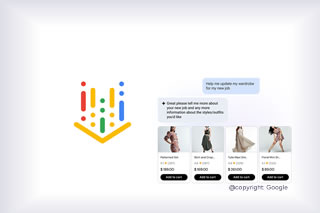
OPTI's AI Sales quoting software runs both processes simultaneously and combines their results, using
Google Cloud technologies (e.g., Gemini, Vertex AI Search for Commerce):
Critical differences:
- Lexical search (Keyword Search): Scans the database for exact matches (product codes, brand names). Unbeatable for technical precision.
- Semantic search (Vector Search): Turns the client's text into a numeric vector and finds products with similar meaning. Unbeatable for synonyms.
- Fusion (Reciprocal Rank Fusion - RRF): An algorithm that re-orders the two lists and delivers the final result with the most relevant matches.
Case study
Situation: An industrial equipment distributor has a high abandonment rate. Clients are searching for "Blind flange dn 50 inox.".
Old ERP: 0 results. (The product was named "Stainless steel DN50 end cap").
Hybrid system:
- The semantic engine made the association "Blind flange" = "End cap" and "inox." = "Stainless steel".
- The lexical engine identified the exact "DN50" attribute, filtering out the wrong sizes.
Result: The "Zero Results" rate drops from 18% to 4%.
Want the technical details? Sign up to get them by email
The PDF guide ”Hybrid Search & Assistants (Chatbots)” contains the full technical explanations.
- Lexical, semantic, and hybrid search.
- Assistants (chatbots) explained. 40 conversational applications, per industry and business purpose.
- Detailed architecture. ERP, AI, and front-end data flow.
- RRF configuration. Adjusting the "weight" between lexical and semantic matching.
- Handling typos. "drillmachine" vs "drill machine" vs "dril machine".
- Google Cloud Technologies involved. Vertex AI Search.
You will receive the guide by email 48h before the official release.
Next guide: Continuous Optimization & Feedback

Article written by
Marian Călborean
Managing Partner and Software Architect, PhD. in Logic, Fulbright Scholar
See on LinkedIn →Schedule a Meeting

News and Guides