



Integrating exact data with AI: RAG and a "single source of truth"
Detailed technical information about connecting ERP, CRM, and static files into a
RAG + SQL architecture.
Get the advantages of AI while eliminating hallucinations around critical data.
The next guide will be published starting on April 22nd 2026.
You will receive the PDF file 48 hours before the official release. Get the Full Manual
How fragmented data and AI hallucinations lose money
The average cost borne by a US company due to poor data quality.
Average time employees lose weekly searching for information across different systems.
94% factual answers in a complex RAG architecture, ~100% via SQL architecture for exact data: price, stock.
Data sync interval cloud - local ERP (with hundreds of thousands of products) into OPTI’s Google Cloud architecture.
The technical problem: Isolated data and AI without checks
Stock and price information is often fragmented between ERP, CRM, eCommerce sites, and local files. A frequent case we solve is fragmented marketing and sales data. We build ETL pipelines to integrate a CRM like HubSpot with a data store like Google BigQuery and a reporting dashboard like Looker Studio. These syncs give AI access to a single source of truth. No slow API queries, no data inconsistency, with the ability to run in parallel AI queries for semantics and creativity and standard SQL for exact data (price, stock).
Reality:
- The AI has no access to the ERP.
- There is no step to verify AI answers.
Result: The AI invents a plausible, but false number (hallucinates). This is the standard behaviour for a LLM which is not grounded in company data.
As a result, agents send quotes with outdated prices or for products that are out of stock. Managers sometimes don’t even know what was sent.
Join the priority list
The solution: Data Warehouse + RAG
OPTI's AI Sales quoting software uses four technological pillars through Google Cloud to create a single source of truth:
- Centralization (BigQuery/SQL): We connect data sources (ERP, CRM, eCommerce) and sync every 15 minutes or event-based.
- Anchoring (RAG): Retrieval-Augmented Generation forces the AI to consult the company’s data before answering.
- Grounding: Gemini File Search, launched in November 2025, includes grounding metadata, explaining which company document each answer was derived from.
- Verification (implicit/explicit): The answer is validated, by design or with a programmed step, against exact data before being displayed in the software.
Case study
Situation: A materials distributor has stock issues and lacks accessible reports. Field agents sell products that were already reserved earlier by the call center or another agent. To diagnose the problem or see real stock, the manager loses hours compiling Excel files exported from the ERP.
Old system: Stock sync once a day. Manual, reactive reporting, based on static exports.
Result: Unfulfilled orders and decisions made on outdated data.
RAG architecture with centralized data and dashboard:
- Synchronization: The system unifies physical stock and each agent’s reservations.
- Availability calculation: The AI doesn’t just read stock; it can calculate net availability through RAG.
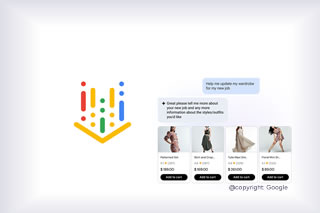
- Conversational reporting: Managers can generate complex reports by asking the AI in natural language, e.g., in Looker
Result: Eliminating stock errors and instant business visibility.
Want the data architecture? Join the list
The PDF guide ”Integrating exact data with AI” will contain the complete technical explanations.
- Architecture diagram. SQL - Google BigQuery - Looker Studio data flows.
- Available connectors. API, ODBC, RPA, Flat Files.
- RAG explained. The difference between Fine-Tuning and RAG.
- Implicit and explicit checks. Techniques for eliminating hallucinations.
- Latency management. How often data can be synced, concurrency and cost issues.
- Reporting with AI. Integrating AI into reporting dashboards.
You will receive the PDF guides by email 48h before the official release.
Next guide: Multimodal input (text, voice, photo)

Article written by
Marian Călborean
Managing Partner and Software Architect, PhD. in Logic, Fulbright Scholar
See on LinkedIn →Schedule a Meeting
News and Guides